
The death of a pope marks a significant moment in the life of the Catholic Church, an event steeped in tradition, rituals, and the transition of power. As the spiritual leader of over a billion Catholics worldwide, the death of a pope sets into motion a carefully orchestrated process known as the “Sede Vacante”, or vacant seat, that ensures a smooth transition of leadership. Here’s an overview of what happens when a pope dies.
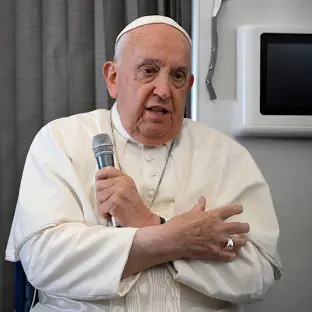
Pope Francis Dies at 88: A Global Outpouring of Tributes
Immediate Steps After the Pope’s Death
When a pope passes away, the first thing that happens is the formal announcement of his death. This is typically carried out by the Camerlengo (the papal chamberlain), a senior member of the Vatican’s administration. In the past, the Camerlengo would tap the pope’s forehead three times with a special silver hammer to ensure that he had truly passed away. This symbolic action no longer takes place but still remains part of tradition.
The Camerlengo is also responsible for securing the Vatican’s papal seal and any administrative tasks that need to be carried out before a new pope is elected. The Vatican’s flag is lowered to half-mast as a sign of mourning.
The Period of Sede Vacante
Once the pope has passed, the Vatican enters a period called Sede Vacante, meaning “the seat is vacant.” This period begins immediately after the pope’s death and lasts until a new pope is elected. During this time, the Vatican’s day-to-day operations are handled by the College of Cardinals, which is the group of senior church leaders who assist the pope in governing the Church. The Camerlengo oversees the temporary administration of the Vatican.
No new decisions or significant actions are taken during this time to ensure that there is no confusion about the authority of the Church until a new pope is elected. The College of Cardinals begins planning for the Papal Conclave, the meeting at which they will elect a new pope.
Funeral Arrangements
The funeral of the pope is a solemn event, following long-established traditions. The pope’s body is typically displayed in a closed casket for the faithful to pay their respects. In the days after the pope’s death, many pilgrims from around the world travel to the Vatican to mourn and honor the life of the pontiff. The funeral itself takes place after a period of mourning, typically within four to six days.
The funeral is conducted by a senior cardinal, and the mass is often attended by world leaders, heads of state, and religious dignitaries. It is a time for Catholics and non-Catholics alike to reflect on the pope’s life, leadership, and contributions to the global community. The pope’s body is then buried, usually in St. Peter’s Basilica or another place of significance within the Vatican.
The Election of a New Pope
After the pope’s funeral, the next step is the election of a new pope. This takes place through the Papal Conclave, a gathering of the College of Cardinals, which typically occurs in the Sistine Chapel. The Cardinals are sequestered from the outside world to ensure they are not influenced by external forces.
To be elected as pope, a candidate must receive a two-thirds majority vote from the Cardinals. In modern times, the Cardinals are often divided between those who favor conservative or progressive approaches to doctrine and governance. The process can take several days, and each vote is followed by the lighting of the smoke from the chimney of the Sistine Chapel. Black smoke means that no pope has been elected; white smoke indicates a new pope has been chosen.
Once elected, the new pope is asked if he accepts the role. If he accepts, he is given the name he will carry as pope, and he is immediately presented to the world from the central balcony of St. Peter’s Basilica. The moment when the new pope appears before the crowd is one of the most iconic and anticipated moments in the papal election process.
The New Pope’s Inaugural Mass
After being elected, the new pope’s inauguration is marked by a special Mass of Inauguration at St. Peter’s Basilica. During this Mass, the new pope officially begins his pontificate. He receives the Papal Ring, a sign of his authority, and delivers a homily that often reflects his vision for the Church and the world during his papacy.
The new pope’s inauguration represents the start of a new era in the Catholic Church, with expectations surrounding his leadership, spiritual guidance, and ability to address the global challenges faced by the Church. The process of electing a pope ensures that the leadership of the Church is passed on without interruption, preserving the continuity of the papacy and its traditions.
What Happens to the Papacy?
The death of a pope is an occasion for reflection on the centuries-old continuity of the papacy. Every pope, in his own way, leaves an imprint on the Catholic Church. The election of a new pope serves as a moment of renewal for the Church, reaffirming the central role of the papacy in guiding Catholics around the world. This process has remained largely unchanged for centuries, symbolizing the enduring nature of the Catholic faith and its commitment to leadership by divine appointment.
While the death of a pope is a sorrowful event, it also represents the ongoing cycle of the Church’s mission. New leaders rise to face the challenges of their times, and the faithful continue their journey of faith, unified in their belief in the pope’s role as the earthly shepherd of Christ’s Church.
Conclusion
When a pope dies, the Catholic Church undergoes a profound period of transition. From the mourning of the pope’s death to the meticulous process of electing a new leader, each step is rooted in tradition and significance. The death of a pope marks both the end of an era and the beginning of a new chapter in the history of the Catholic Church, reaffirming the strength and resilience of one of the world’s oldest institutions.